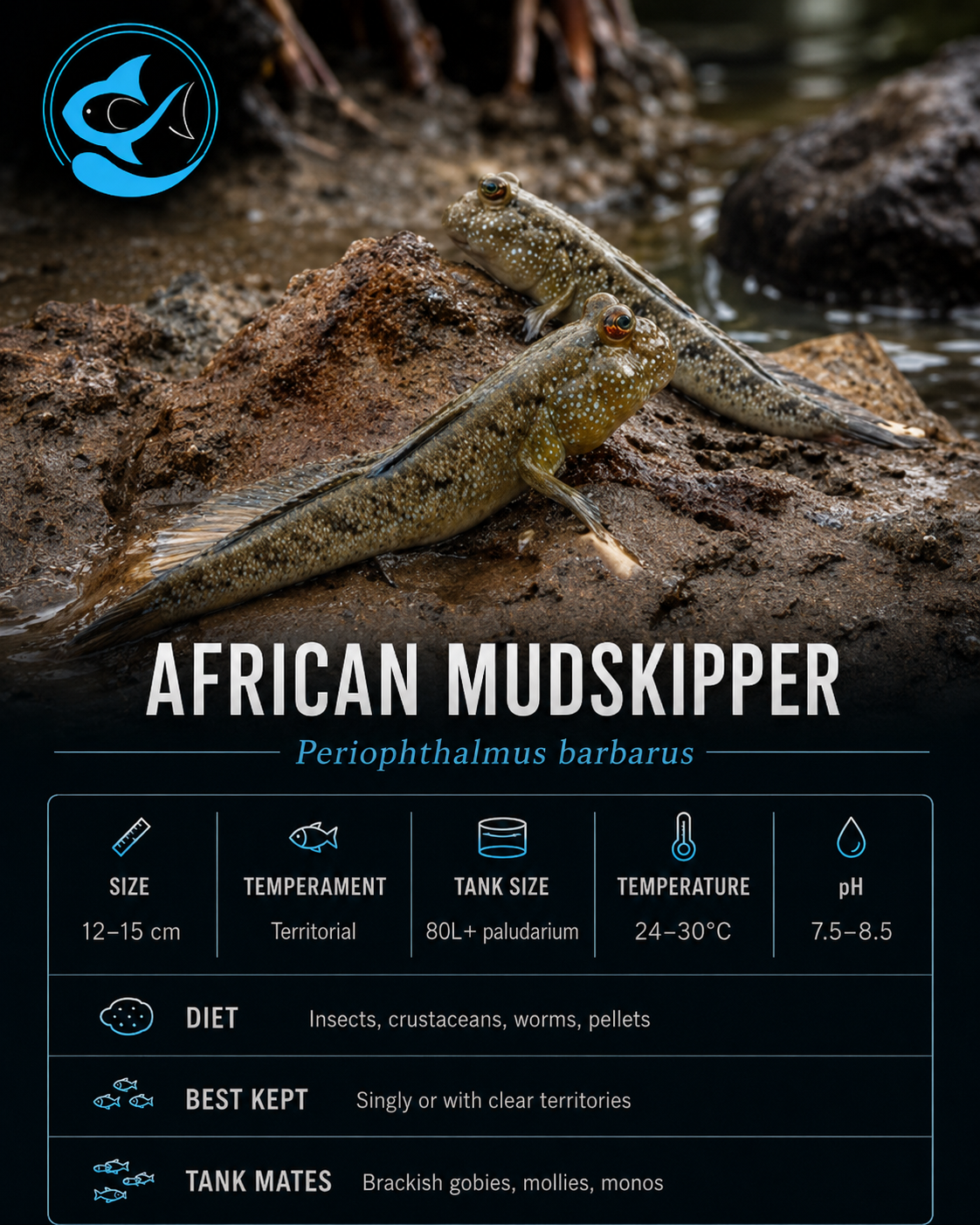


African Mudskipper
African Mudskipper
Product Description
Product Description
African mudskippers are amphibious fish found in mangrove swamps and tidal flats along West Africa. They are famous for their ability to walk on land, breathe air, and climb roots or rocks.
Key Features
-
Size: 6–10 inches (depending on species)
-
Color: Brown/olive body with blue or silvery spots (varies by species)
-
Eyes: Large, frog-like, on top of the head
-
Behavior: Territorial, semi-aggressive, very active
-
Lifestyle: Lives on land more often than in water; needs a land/water setup
🐠 Care Requirements
✔️ Tank Setup
Mudskippers require a paludarium—half land, half shallow water.
Tank Size
-
Single: 30 gallons minimum
-
Group: 55–75 gallons (they fight over land territories)
Water Conditions
-
Salinity: Brackish (SG 1.005–1.015)
-
Temperature: 75–82°F (24–28°C)
-
pH: 7.5–8.5
-
Water Depth: Shallow (2–6 inches) — they prefer to sit with bodies submerged and heads above water
Land Area
-
Must be easy to climb with:
-
Mud-like substrate (sand/mud mixture)
-
Rocks and driftwood
-
Mangrove root-style structures
-
They MUST be able to crawl out of the water easily.
Humidity
-
Warm, humid air is crucial
-
A tight lid is required (they are escape artists)
🍽️ Diet
African mudskippers are carnivorous. Feed:
-
Small insects (crickets, mealworms)
-
Bloodworms
-
Shrimp
-
Earthworms
-
Frozen or live brine shrimp
-
High-protein pellets
Feed daily in small portions.
🤝 Tankmates
Mudskippers are territorial and prefer species that stay in the water, not on land.
Safe Options (in brackish water):
-
Mollies
-
Bumblebee gobies
-
Knight gobies
-
Some hardy brackish killifish
Avoid:
-
Any fish that swims near the surface
-
Crabs (mudskipper may attack or be attacked)
-
Other mudskippers if space is small
🐾 Behavior
-
Can “walk” using pectoral fins
-
Will gulp air and store it in gill chambers
-
Extremely territorial—especially males
-
Social but aggressive without enough land
🪺 Breeding
Breeding in captivity is rare.
Basics:
-
Males dig burrows in mud
-
They create oxygenated chambers to protect eggs
-
Requires deep mud substrate and tidal simulation
Low stock: 5 left
Couldn't load pickup availability

What Does ''Available To Order'' Mean?

What Does ''Available To Order'' Mean?
“Available to order” means this item is not in store right now. It can be ordered and delivered within 5–7 working days. Please confirm availability before you order.