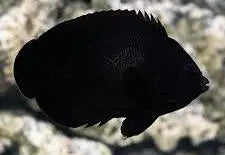

Midnight Angelfish
Midnight Angelfish
Fast Shipping
Quality Products
Affordable Price
Reach out to us on ''available to order'' items via WhatsApp or email
Low stock: 1 left
Couldn't load pickup availability

Midnight Angelfish
Product Description
Product Description
The Midnight Angelfish (Genicanthus personatus) is a striking and somewhat rare species of angelfish that is highly sought after in the aquarium trade due to its unique appearance and relatively peaceful nature compared to other angelfish species. Native to the Indo-Pacific, this fish is a beautiful addition to a reef tank for experienced hobbyists who can meet its care requirements. Below is a detailed description and care guide for the Midnight Angelfish.
Description:
- Size: The Midnight Angelfish typically grows to about 5-6 inches (13-15 cm) in length, although some individuals may grow slightly larger.
-
Appearance:
- The Midnight Angelfish is known for its dramatic coloration and elegant shape.
- The body is mostly blackish or dark brown, with the face having a bluish-gray tint. It features yellow accents around the pectoral fins and tail, which make it stand out.
- The fins are long and flowing, especially the dorsal fin, which extends prominently. This makes it an attractive, graceful fish in the aquarium.
- Males and females look quite similar, though males tend to have slightly more elongated dorsal fins and are often more vibrant in coloration.
- The eye region of the Midnight Angelfish is distinctive, with a bright white ring around the eyes, which contrasts beautifully with the darker body.
Care Requirements:
- Tank Size: The Midnight Angelfish requires a minimum tank size of 70-100 gallons (265-380 liters). Larger tanks are preferable, especially if you plan to keep it with other species, as they need plenty of space to swim and establish territory.
-
Water Parameters:
- Temperature: 72°F to 78°F (22°C to 26°C)
- Salinity: 1.020-1.025 SG
- pH: 8.1-8.4
- Alkalinity: 8-12 dKH
- Ammonia/Nitrites: 0 ppm
- Nitrates: Keep below 20 ppm for optimal health.
- Filtration: Since the Midnight Angelfish is a relatively large species, strong filtration is essential to maintain water quality. Additionally, the tank should have moderate to strong water flow to simulate the ocean currents found in its natural environment.
Diet:
- The Midnight Angelfish is omnivorous in nature, and in the wild, it feeds on a variety of foods, including zooplankton, small crustaceans, algae, and sponges.
- In captivity, it will eat a variety of foods, including:
- Frozen or live foods like brine shrimp, mysis shrimp, and other small crustaceans.
- High-quality pellets or flake foods designed for marine fish.
- Algae-based foods like spirulina, nori, and other seaweed to supplement its diet.
- Occasional meaty foods like chopped seafood can also be offered to mimic its natural feeding behavior.
- Live rock and marine algae will encourage natural grazing behavior.
Behavior and Tankmates:
- Temperament: The Midnight Angelfish is one of the more peaceful species of angelfish, making it a good candidate for community tanks. However, it can be territorial at times, especially with other angelfish species or fish that resemble it.
-
Tankmates:
- It generally does well with other peaceful marine fish like wrasses, gobies, tangs, and clownfish.
- It can be kept with reef-safe invertebrates and corals, though it's important to monitor it when first introduced to ensure it doesn't nip at corals or sessile invertebrates.
- Avoid keeping multiple angelfish of the same genus in the same tank, as this can lead to aggression and territorial disputes. If you want to keep more than one angelfish, ensure you have a large enough tank with plenty of hiding spots and territories.
Special Considerations:
- Hiding Places: Providing plenty of rockwork and hiding spots in the aquarium will help reduce stress and provide the angelfish with areas to retreat if it feels threatened.
- Sand Bed: Although the Midnight Angelfish does not typically bury itself like some wrasses, having a soft, fine sand substrate will benefit other species in the tank and offer additional hiding spots.
- Jumping: Like many angelfish, the Midnight Angelfish can be prone to jumping, so it's important to have a secure lid or cover on the aquarium.
- Acclimation: As with many angelfish, the Midnight Angelfish can be sensitive to water parameter changes when first introduced to a tank. A slow acclimation process is important to avoid stress.
Reef Compatibility:
- The Midnight Angelfish is generally considered reef-safe. It may occasionally nip at soft corals or sessile invertebrates, but it is less likely to cause significant damage compared to other angelfish species.
- It is an excellent choice for a reef aquarium as it won’t typically harm corals, making it a popular option for hobbyists who want a peaceful angelfish that can coexist with their reef ecosystem.
Breeding:
- Captive Breeding: While breeding of the Midnight Angelfish in captivity is not well-documented, they do breed in the wild. They typically form pairs and engage in harem breeding, with males courting females.
Conclusion:
The Midnight Angelfish is a striking, peaceful species that can make a beautiful addition to a well-established reef tank. It is ideal for more experienced hobbyists who can provide a large enough tank, maintain proper water conditions, and meet its dietary needs. With its stunning appearance and relatively mild temperament, the Midnight Angelfish is an excellent choice for those looking for an elegant and colorful fish that can coexist with a variety of other marine species in a reef environment