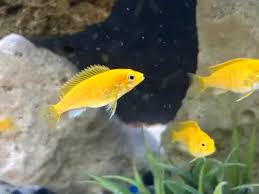


Yellow Lab cichlid 15-25mm (Labidochromis caeruleus )
Yellow Lab cichlid 15-25mm (Labidochromis caeruleus )
Fast Shipping
Quality Products
Affordable Price
Reach out to us on ''available to order'' items via WhatsApp or email
Out of stock
Couldn't load pickup availability

Yellow Lab cichlid 15-25mm (Labidochromis caeruleus )
Product Description
Product Description
All our fish, shrimp and corals are bagged with fresh oxygen as well as a heat pack in winter.
When ordering livestock please select the box size and add it to your cart for accurate overnight (1-2 days) shipping costs. A small box can take 1-2 bags and a medium box 6 bags. One bag fits max 10 small (1-3cm) fish or max 2 medium (3-5cm) fish or max 1 large (>5cm) fish.
ONE SPECIES PER BAG. Eg: One bag of 10 neon tetra.
Labidochromis caeruleus: Description and Care Guide
Description:
- Common Name: Yellow Lab, Yellow Lab Cichlid
- Scientific Name: Labidochromis caeruleus
- Origin: Lake Malawi, Africa
- Size: 3-4 inches (8-10 cm)
- Lifespan: 5-8 years with proper care
-
Coloration:
- Males: Bright yellow with a more intense coloration.
- Females: Lighter yellow or pale coloration, with less intensity than males.
- Juveniles: Initially pale or translucent, developing the yellow coloration as they mature.
- Temperament: Peaceful, but can be territorial during breeding.
- Diet: Omnivorous; primarily herbivorous, but will accept protein-rich foods.
Care Requirements:
- Tank Size: Minimum 30 gallons for a small group; larger tanks are recommended for more individuals.
-
Water Parameters:
- pH: 7.8-8.6 (alkaline water)
- Temperature: 75-82°F (24-28°C)
- Hardness: 10-15 dGH
-
Tank Setup:
- Rock formations and caves for hiding and establishing territories.
- Sandy or fine-gravel substrate is ideal.
- Good filtration system to manage waste and maintain water quality.
- Lighting: Moderate to bright lighting, which suits the yellow coloration.
-
Tankmates:
- Peaceful cichlids, such as other Mbunas or similarly sized species.
- Avoid overly aggressive or large fish that could bully the Yellow Labs.
-
Diet:
- High-quality cichlid pellets (preferably herbivorous).
- Supplement with spirulina, algae wafers, and occasional protein (e.g., brine shrimp, bloodworms).
-
Behavior:
- Generally peaceful, but can become territorial, especially during breeding.
- Prefers to swim in the mid-to-bottom areas of the tank.
-
Breeding:
- Substrate spawners.
- Females typically lay eggs on rocks, and the male fertilizes them.
- Females are mouthbrooders, carrying the fertilized eggs in their mouths until they hatch.
Additional Tips:
- Keep with other peaceful Mbuna or robust cichlids to avoid territorial disputes.
- Provide plenty of hiding spaces to help reduce aggression.
- Regular water changes are essential for maintaining optimal water quality.
- The Yellow Lab thrives in stable water conditions, so frequent testing and maintenance are key to their health.