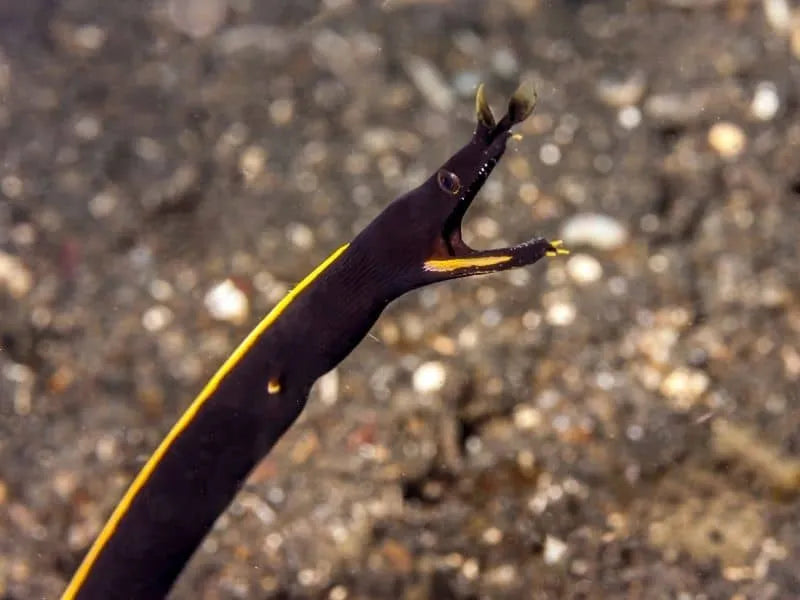


Black Ribbon Eel
Black Ribbon Eel
Fast Shipping
Quality Products
Affordable Price
Reach out to us on ''available to order'' items via WhatsApp or email
Low stock: 1 left
Couldn't load pickup availability

Black Ribbon Eel
Please note that we can only ship via airfreight
Black Ribbon Eel Profile
Scientific name: Rhinomuraena quaesita
Common names: Black Ribbon Eel, Ribbon Moray, Ribbon Eel
Adult size: Up to around 100–130 cm, but very slender
Care level: Expert only
Temperament: Shy, secretive, predatory
Reef safe: With caution
Diet: Carnivore
Best for: Mature marine aquariums with experienced keepers
The Black Ribbon Eel is the juvenile/young stage of the Ribbon Moray, known for its long, ribbon-like body, black colouration, yellow dorsal stripe, and distinctive flared nostrils. In the wild, they are usually found hidden in sand, rubble, or reef crevices, often with only the head showing. They naturally feed on small fish.
Aquarium Care
This is a beautiful but difficult species to keep. Many ribbon eels refuse prepared foods when first imported, so they should only be kept by experienced marine hobbyists. A mature, stable system is very important.
Recommended aquarium size:
- Minimum: 300 L for smaller specimens
- Preferred: 500 L+ for long-term care
The tank must have a very tight-fitting lid, as ribbon eels are excellent escape artists and can squeeze through small gaps.
Suggested Water Parameters
- Temperature: 24–27°C
- Salinity: 1.023–1.026 SG
- pH: 8.0–8.4
- KH: 8–12 dKH
- Ammonia/Nitrite: 0
- Nitrate: Keep as low as possible, ideally under 20 ppm
Tank Setup
Provide plenty of hiding spaces. They do best with:
- Deep rockwork caves
- PVC pipe tunnels hidden under rock or sand
- Sandy areas
- Low-stress tank mates
- Gentle to moderate flow
- Dimmer shaded hiding areas
They are often shy at first and may only come out during feeding.
Feeding
Ribbon eels are carnivores and can be difficult to get feeding. Offer food using long feeding tongs or a feeding stick.
Good foods include:
- Silversides
- Lancefish
- Marine fish flesh
- Prawn/shrimp pieces
- Squid
- Mussel
- Clam meat
Feed around 2–3 times per week, depending on body condition. Avoid overfeeding, as uneaten meaty foods can quickly pollute the aquarium.
Compatibility
Best kept with peaceful to semi-peaceful fish that are too large to be swallowed.
Avoid keeping with:
- Very small fish
- Cleaner shrimp and ornamental shrimp
- Small gobies/blennies
- Aggressive triggers
- Puffers
- Large wrasses
- Fish that may nip or harass the eel
They are generally safe with corals, but not safe with small fish or crustaceans.
Colour Change Note
Black ribbon eels are usually juveniles/young males. As they mature, they may change colour, with males often becoming blue/yellow and females becoming more yellow