Skip to product information

Harlequin Sweet lips (Juv. 70mm)

Harlequin Sweet lips (Juv. 70mm)

 
Regular price R 850.00
Regular price R 850.00 Sale price
SAVE Sold out
Split your purchase with interest-free payments from R 141.66/m

Make your first payment today, then monthly over 2–6 months.

check_circle Fast Shipping

check_circle Quality Products

check_circle Affordable Price

Reach out to us on ''available to order'' items via WhatsApp or email

Low stock: 1 left

  • Apple Pay
  • Google Pay
  • Mastercard
  • Visa
Harlequin Sweet lips (Juv. 70mm)

Harlequin Sweet lips (Juv. 70mm)

Regular price R 850.00
Regular price R 850.00 Sale price
SAVE Sold out

Description

  • Also known as the Clown Sweetlips, Spotted Sweetlips or Many-Spotted Sweetlips.
  • Juveniles are extremely striking, with a dark brown body and large white patches, and swim with an exaggerated wiggling motion.
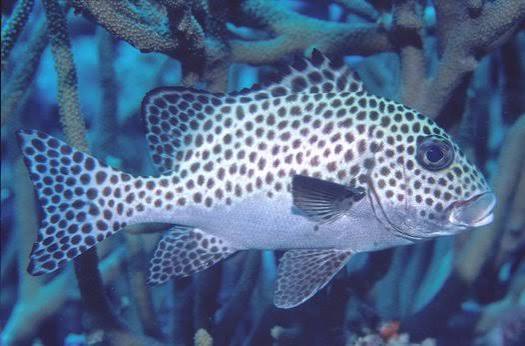
  • As they mature, the pattern changes dramatically: adults become pale/grey-white with numerous dark brown spots.
  • Juveniles are thought to mimic toxic flatworms as a defence against predators.
  • Adult size: up to approximately 72 cm.
  • Temperament: Generally peaceful/shy.
  • Care level: Expert / Difficult
  • Reef safe: With caution — corals are generally not the problem, but many ornamental invertebrates can become food.

Aquarium Care

  • Minimum tank: I would recommend around 1,800–2,000 L+ long-term. LiveAquaria recommends 500+ gallons, while Quality Marine lists at least 200 gallons but stresses that they are better suited to extremely large or public aquaria.
  • Temperature: 22–26°C
  • Salinity: 1.020–1.025 SG
  • pH: 8.1–8.4
  • KH: 8–12 dKH
  • Provide a large amount of open swimming room.
  • Include caves, overhangs and sheltered rockwork where the fish can retreat during the day.
  • Good oxygenation and strong filtration are essential due to the eventual size and heavy feeding.

Feeding

Harlequin Sweetlips are carnivores. In nature they feed predominantly at night on crustaceans, molluscs and smaller fish.

Offer:

  • Mysis shrimp
  • Krill
  • Chopped prawn/shrimp
  • Mussel
  • Squid
  • Clam
  • Chopped marine fish
  • Quality frozen carnivore preparations

New imports can be very difficult to get feeding. Live marine shrimp can sometimes be used initially to trigger a feeding response, followed by conversion onto frozen foods.

Feed juveniles several small meals daily.

Tankmates

Generally peaceful with fish too large to swallow, but remember that this becomes a very large predator.

Suitable
✓ Tangs
✓ Large angelfish
✓ Larger wrasses
✓ Rabbitfish
✓ Larger peaceful reef fish
✓ Other robust marine fish

Avoid
✗ Tiny gobies and other very small fish
✗ Small shrimp
✗ Small crabs
✗ Small snails
✗ Brittle/serpent stars and similar invertebrates

They may consume smaller crustaceans, snails, worms and other invertebrates, so they are not truly reef-safe in the conventional sense.

Important Customer Note

This is one fish I'd be quite careful selling without explaining its adult requirements. The little 5–10 cm juveniles look fantastic and people often assume they'll remain relatively small, but P. chaetodonoides can reach 72 cm and grows into a completely different-looking fish.

Quick Care

  • Adult size: Up to 72 cm
  • Tank: ±1,800–2,000 L+ long-term
  • Care: Expert
  • Temperament: Peaceful
  • Diet: Carnivore
  • Reef safe: With caution
  • Temperature: 22–26°C
  • Salinity: 1.020–1.025
  • Best feature: Spectacular juvenile pattern and swimming behaviour
  • Biggest concern: Adult size and difficulty getting juveniles established on food


View full details
Coastal Pets Store Provides Top Quality Products Coastal Pets Provides Top Quality Products Coastal Pets Provides Top Quality Products Coastal Pets Provides Top Quality Products
Coastal Pets Provides Top Quality Products Coastal Pets Provides Top Quality Products Coastal Pets Provides Top Quality Products