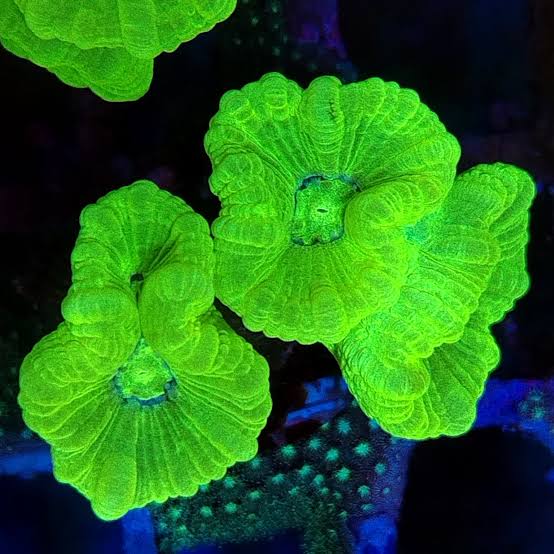


Neon Green Candy Cane Coral
Neon Green Candy Cane Coral
Fast Shipping
Quality Products
Affordable Price
Reach out to us on ''available to order'' items via WhatsApp or email
Low stock: 4 left
Couldn't load pickup availability

Neon Green Candy Cane Coral
Overview
Candy Cane Coral, also known as the Trumpet Coral, is a hardy Large Polyp Stony (LPS) coral that is an excellent choice for both beginner and experienced reef aquarists. It forms branching colonies with fleshy, inflated polyps that resemble candy canes. Available in green, teal, blue, yellow, and striped varieties, it grows steadily under stable reef conditions.
Care Level
🟢 Easy
Scientific Name
Caulastrea furcata / Caulastrea echinulata
Temperament
🟡 Semi-Aggressive
Lighting
Low to Moderate (50–150 PAR)
- Thrives under moderate lighting.
- Can adapt to higher light if acclimated slowly.
- Excessive light may cause tissue recession or colour fading.
Water Flow
Low to Moderate
- Prefers gentle, indirect water movement.
- Moderate flow helps remove waste without damaging the fleshy polyps.
- Avoid direct, high-pressure flow.
Placement
- Middle to lower regions of the aquarium.
- Allow 5–10 cm clearance from neighbouring corals.
- Place on stable rockwork where colonies have room to branch.
Water Parameters
| Parameter | Recommended |
|---|---|
| Temperature | 24–26°C |
| Salinity | 1.025–1.026 SG |
| pH | 8.1–8.4 |
| Alkalinity | 8–9 dKH |
| Calcium | 420–450 ppm |
| Magnesium | 1300–1400 ppm |
| Nitrate | 2–15 ppm |
| Phosphate | 0.03–0.10 ppm |
Feeding
Although Candy Cane corals obtain much of their energy from their symbiotic zooxanthellae algae, regular feeding promotes faster growth, brighter colours, and healthier tissue.
Recommended foods:
- Mysis shrimp
- Enriched brine shrimp
- Finely chopped seafood
- Reef Roids
- Coral Frenzy
- Benepets
Feed 1–2 times per week, ideally after the lights begin to dim when feeding tentacles are extended.
Aggression
Candy Cane corals are considered semi-aggressive.
- Can extend short sweeper tentacles, particularly at night.
- Keep 5–10 cm away from neighbouring corals.
- Generally peaceful toward other Caulastrea colonies.
Growth Rate
🟢 Moderate
Under stable water parameters and regular feeding, new heads develop frequently, forming attractive branching colonies.
Reef Compatibility
✅ Reef Safe
Candy Cane corals are completely reef-safe and coexist well with:
- Reef-safe fish
- Cleaner shrimp
- Snails
- Hermit crabs
Avoid placing them where large angelfish, butterflyfish, or other coral-nipping species may damage the fleshy polyps.
Signs of a Healthy Candy Cane Coral
✔ Fully inflated, fleshy polyps during the day
✔ Bright, vibrant coloration
✔ Feeding tentacles visible after lights out
✔ New heads forming around the colony base and branches
Common Problems
- Tissue recession: Usually caused by unstable alkalinity, excessive flow, or poor water quality.
- Brown Jelly Disease: Remove affected tissue promptly and consider an iodine dip to prevent spread.
- Bleaching: Often the result of excessive light or sudden changes in lighting intensity.
- Poor polyp extension: Can indicate unsuitable flow, unstable parameters, or recent stress.
Quick Facts
- Scientific Name: Caulastrea spp.
- Common Names: Candy Cane Coral, Trumpet Coral
- Care Level: Easy
- Temperament: Semi-Aggressive
- Lighting: Low to Moderate
- Flow: Low to Moderate
- Placement: Middle to Lower
- Growth Rate: Moderate
- Feeding: 1–2 times per week
- Minimum Tank Size: 75 L+
- Reef Safe: ✅ Yes
Coastal Pets Tip 💡
Candy Cane Corals are among the best beginner LPS corals. Stable alkalinity, moderate lighting, and occasional target feeding will reward you with rapid head growth and vibrant colours, making them a standout addition to almost any reef aquarium.