

Mantis shrimp
Mantis shrimp
Product Description
Product Description
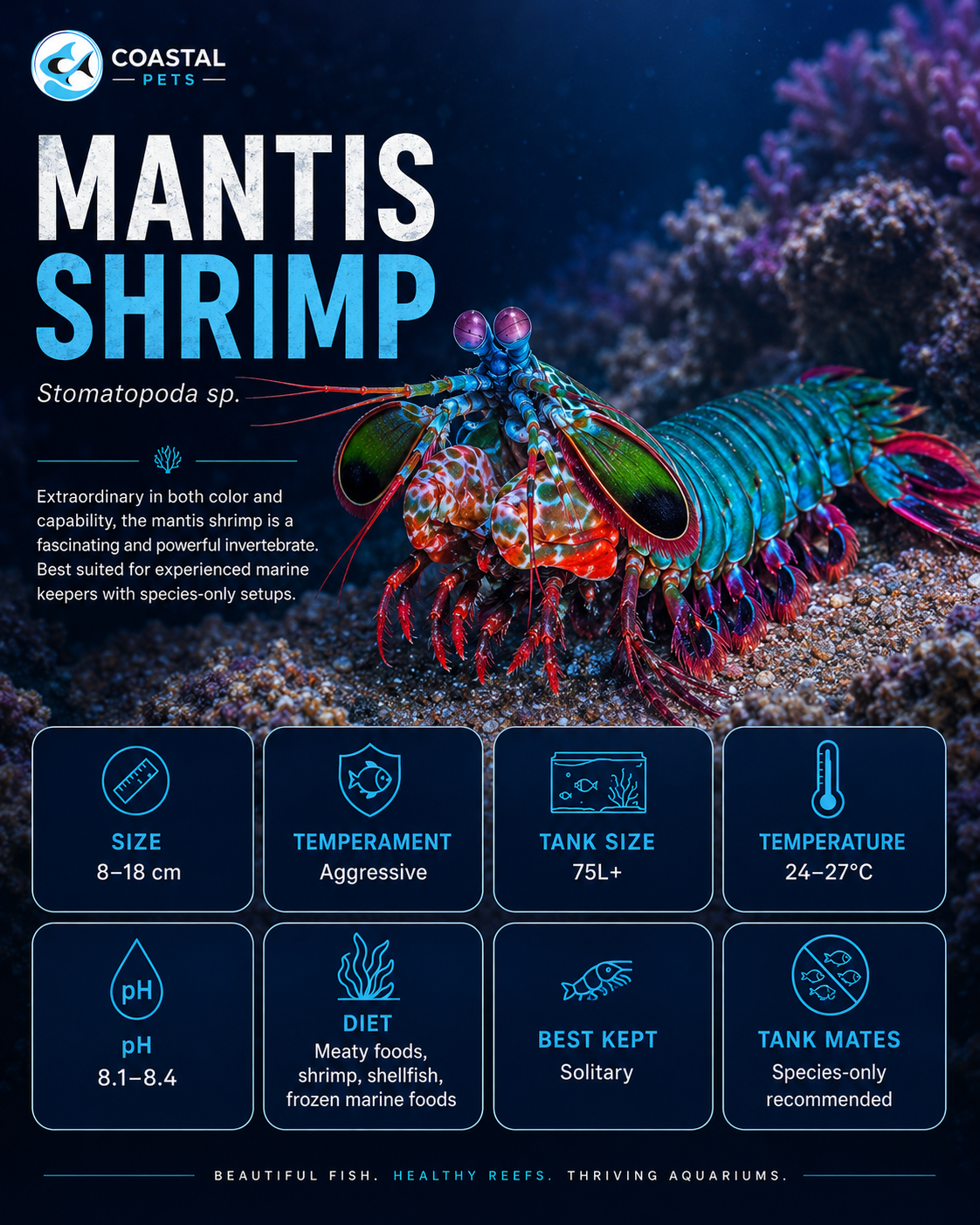
Mantis shrimp are aggressive, burrowing crustaceans that hunt using one of the fastest movements in the natural world. Although Mantis shrimp can be interesting augmentations to certain saltwater tanks, generally, they are viewed as a disturbance by aquarium hobbyists.
These stomatopods can crack the calcified shells of crabs and snails or spear down unsuspecting fish with lighting speed. Their strike makes use of power-amplification mechanisms to move their limbs much faster than is possible by muscles alone.
Nonetheless, if you are interested in keeping Mantis Shrimp as an aquarium pet or want to learn more about these unique creatures, this care guide will tell everything you need to know about them.
Mantis shrimp really do not require much care at all. This is one of the reasons why smaller mantis shrimp are the most popular with aquarium hobbyists. In addition, it is easy to obtain them for relatively low cost in many pet stores.
Quick Notes about Mantis Shrimp
| Name | Mantis shrimp |
| Other Names |
Peacock Mantis Shrimp, Thumb splitters, Prawn killers, Sea locusts |
| Order | Stomatopod |
| Tank size (minimum) | 10 gallons (~40 liters) |
| Keeping | Easy |
| Breeding | Easy |
| Size | 2.5 – 40 cm (1 – 15 Inches) |
| Optimal Temperature | 22 – 26°C (~72°F – 80°F) |
| Water type | SG = 1.018 – 1.025 |
| Optimal PH | 8.0 – 8.5 |
| Optimal KH | 8 – 16 |
| Nitrate | Less than 20 ppm |
| Diet | Carnivore |
| Temperament | Extremely aggressive |
| Life span | 3 – 6 years |
| Color Form | Vibrant multi-colure – Green, blue, red, orange |
Interesting fact: It is quite interesting but the Mantis shrimp is not a shrimp or mantis. They are stomatopods. About 340 million years ago (before the first dinosaurs appeared on the scene), they branched from other members of the class Malacostraca (shrimp, crabs, crayfish, and lobsters).
Low stock: 1 left
Couldn't load pickup availability

What Does ''Available To Order'' Mean?

What Does ''Available To Order'' Mean?
“Available to order” means this item is not in store right now. It can be ordered and delivered within 5–7 working days. Please confirm availability before you order.