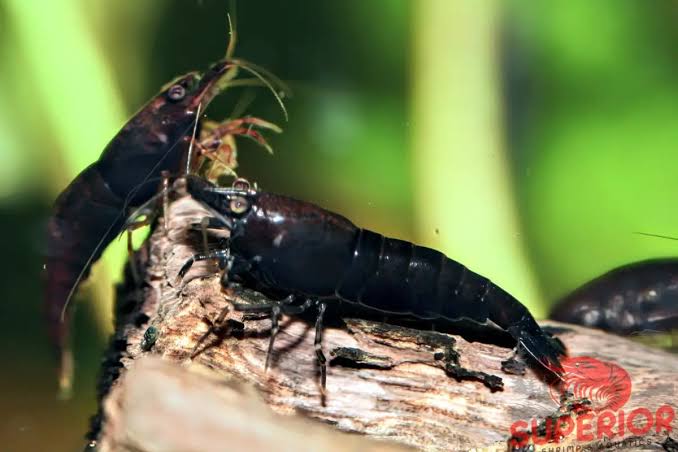


Shrimp-Black rose
Shrimp-Black rose
Product Description
Product Description
Black Rose Shrimp are a striking dark variety of Neocaridina davidi. They’re cared for much like Cherry Shrimp and make an excellent choice for planted freshwater aquariums.
Black Rose Shrimp – Neocaridina davidi
Description: Black Rose Shrimp are selectively bred Neocaridina known for their deep black to jet-black coloration. High-grade specimens can appear almost completely opaque, creating a beautiful contrast against green plants, pale substrates, and natural hardscape. They are peaceful, active scavengers that spend much of the day grazing on biofilm, algae, and leftover food.
Care level: Easy
Adult size: ±2.5–3 cm
Temperature: 20–26 °C, ideally around 22–24 °C
pH: Approximately 6.5–8.0
GH: 6–12 dGH
KH: 2–8 dKH
Tank size: From ±20 L, with larger, mature tanks generally being more stable
Temperament: Very peaceful
Diet: Omnivorous scavenger – biofilm, soft algae, quality shrimp foods, sinking foods and occasional blanched vegetables.
A mature planted aquarium with plenty of mosses, plants, wood and other surfaces for biofilm is ideal. Stable water parameters are more important than trying to achieve one exact pH or hardness. Avoid sudden temperature or water-chemistry changes, and always ensure any medications or treatments used are shrimp-safe. Copper-containing medications can be particularly dangerous to shrimp.
Black Rose Shrimp breed readily in suitable freshwater conditions. Females carry eggs beneath their abdomen for roughly 3–4 weeks before releasing fully formed miniature shrimp. No separate larval or saltwater stage is required.
Compatibility: Best with other dwarf shrimp, snails and small, peaceful fish. Even peaceful fish may eat newborn shrimplets, so dense plants and moss provide valuable cover.
Important: Avoid mixing Black Rose Shrimp with other Neocaridina colour varieties if maintaining their strong black coloration is important. Different colours can interbreed, and subsequent generations may gradually produce less predictable or wild-type coloration.
78 in stock
Couldn't load pickup availability

What Does ''Available To Order'' Mean?

What Does ''Available To Order'' Mean?
“Available to order” means this item is not in store right now. It can be ordered and delivered within 5–7 working days. Please confirm availability before you order.