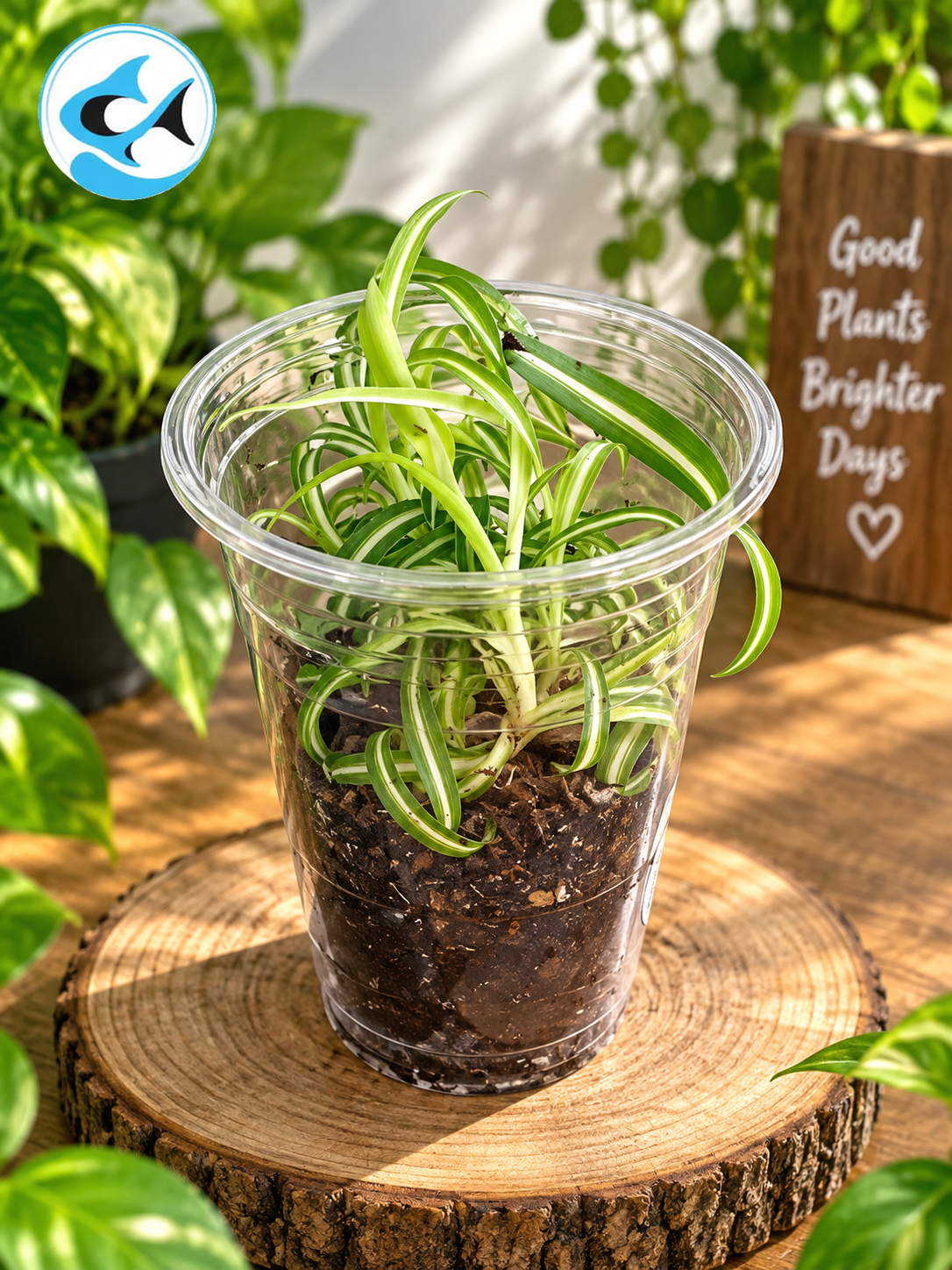


Spider Plant Chlorophytum Comosum Bonnie 9cm
Spider Plant Chlorophytum Comosum Bonnie 9cm
Product Description
Product Description
Pet and reptile safety
Spider Plant 'Bonnie' is considered non-toxic to cats, dogs, and horses, making it a popular choice for pet-friendly homes. It is also generally regarded as safe for reptiles commonly kept as pets, including crested geckos, leopard geckos, bearded dragons, corn snakes, and many arboreal species when used as an enclosure plant. While safe, it should be treated as a decorative plant rather than a food source, and excessive nibbling is still best discouraged.
Appearance and growth habit
The Spider Plant Chlorophytum comosum 'Bonnie' is a fun twist on the classic Spider Plant, featuring curly, arching green leaves with creamy-white stripes that give it a lively, slightly wild hairstyle. Its compact growth makes it perfect for shelves, desks, hanging baskets, and smaller spaces. As it matures, it produces long stems with baby plantlets, making it one of the easiest plants to multiply and share—whether your friends asked for one or not.
Care requirements
'Bonnie' thrives in bright, indirect light but happily tolerates medium light, making it a wonderfully forgiving indoor plant. Water when the top few centimetres of soil feel dry, and avoid leaving it sitting in soggy soil. It appreciates average household humidity and temperatures between 18–27°C. Feed with a balanced liquid fertiliser once a month during spring and summer to keep those curls looking their best.
Troubleshooting
Brown leaf tips are usually caused by inconsistent watering, dry air, or minerals in tap water, but they won't stop your plant from thriving. If the leaves lose their curls or vibrant colour, it may need a little more bright, indirect light. Yellowing leaves often point to overwatering, so let the soil dry slightly between drinks. Thankfully, this is one plant that's far more likely to forgive you than hold a grudge.
Low stock: 1 left
Couldn't load pickup availability

What Does ''Available To Order'' Mean?

What Does ''Available To Order'' Mean?
“Available to order” means this item is not in store right now. It can be ordered and delivered within 5–7 working days. Please confirm availability before you order.