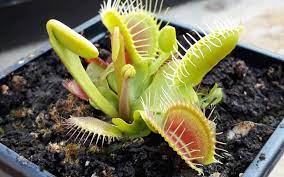


Venus Flytrap
Venus Flytrap
Fast Shipping
Quality Products
Affordable Price
Reach out to us on ''available to order'' items via WhatsApp or email
Low stock: 6 left
Couldn't load pickup availability

Venus Flytrap
VENUS FLYTRAPS (Dionaea Muscipula)
LIGHT:
Venus flytraps need a lot of light to thrive. Plants can be grown in a protected area outdoors with full sun, year round
In Gauteng, we recommend growing flytraps outdoors with (at the very least) 6 hours morning sun. Note that during summertime soil may become very hot and plants may overheat during heat waves. During these spells, protect your plant from the harsh afternoon sun
WATER:
As venus flytraps are bog plants, always keep the soil moist using the tray method. Top-watering is fine during winter time when plants are dormant and sluggish traps will not be triggered accidentally
Low-mineral water is highly recommended and we use distilled- or reverse osmosis water, when rainwater is scarce
Fluctuate the water level to air the roots by letting the tray dry in between waterings, but never let the plant itself dry out completely
FEEDING:
Carnivorous plants are self-sufficient hunters and have adapted to catch and digest their own food. As venus flytraps are plants, their growing energy is derived from the sun via photosynthesis (Therefor your plant will never die due to starvation). During the growing season they will lure, catch and digest their own insects which acts as a type of fertiliser. Trap movement requires a lot of energy and therefor each trap have a limited lifespan for opening and closing - usually 1-3 times. Triggering the traps manually, waste their energy and the trap will die off prematurely
SOIL:
Do not fertilise your plant and only use sphagnum-peat based plant soil, which is low in minerals. Compost, coco peat, palm peat and regular garden variety potting soil contains salts and minerals that will kill your plant
We recommend repotting venus flytraps yearly, into fresh carnivorous plant soil, at the end of winter dormancy (around August) or just before they wake up in springtime
WINTER DORMANCY:
Venus flytraps are sun-loving temperate plants which means they grow actively during summertime, and die back to a dormant rhizome (underground stem) during the winter months when the daylight period is shorter